Introduction: Let’s Talk About What’s Really in That Bowl
You love your dog. I mean, really love them. That face, those eyes, the way they lose their mind when you grab the leash. They’re family.
So here’s a question that’s probably crossed your mind while staring at a bag of kibble: “Could I be feeding them something better?”
I’ve been there. Standing in the pet food aisle, flipping over bags, trying to pronounce ingredients that sound more like science experiments than actual food. It’s confusing. And honestly? A little unsettling.
That’s exactly why I started exploring homemade dog food recipes. Not because I have endless free time (I definitely don’t). Not because I’m a veterinarian (I’m not). But because I wanted to know, with absolute certainty, exactly what was going into my dog’s body.
Turns out, making your own dog food isn’t nearly as complicated as I thought. And the results? Let’s just say my picky rescue mutt, who used to sniff and walk away from kibble, now cleans her bowl in about twelve seconds flat.
If you’re new to this whole homemade dog food thing, you’re in the right place. Let me walk you through everything you need to know.
Why Consider Homemade Dog Food?
Before we jump into recipes, let’s talk about the “why.” Because switching from store-bought to homemade is a commitment. Worth it? Absolutely. But you should know what you’re signing up for.
The Benefits:
- Complete Ingredient Control: You decide what goes in. No mystery meats, no artificial preservatives, no fillers like corn or wheat that offer zero nutritional value.
- Tailored to Your Dog’s Needs: Allergies? Sensitive stomach? Picky eater? You can customize everything.
- Fresh, Whole Ingredients: The same vegetables, proteins, and grains you’d eat yourself. Because shouldn’t your dog eat as well as you do?
- Potential Health Improvements: Many owners report shinier coats, cleaner teeth, more energy, and better digestion after switching.
The Honest Truth (Because You Deserve It):
Homemade dog food isn’t automatically healthier than high-quality commercial food. The key word is balanced. A poorly planned homemade diet can actually harm your dog. Scary, right? But don’t worry—that’s exactly why I’ve put together these vet-approved recipes and guidelines.
The American Kennel Club emphasizes that any homemade diet must be nutritionally complete. We’re going to make sure yours is.
The Golden Rules of Homemade Dog Food (Read This First!)
Before you grab a saucepan, let’s cover the non-negotiables. These rules keep your dog safe and healthy.
H3: Rule #1: Balance Over Time, Not Every Meal
Here’s something most beginners don’t realize. Your dog doesn’t need every single meal to be perfectly balanced. They need balance over time—across a day or even a few days.
Think of it like your own diet. You don’t eat every nutrient at breakfast. You eat across the whole day. Same concept applies here.
Rule #2: The Essential Nutrient Breakdown
Every homemade dog food recipe needs these four components:
| Nutrient | Percentage | Examples |
|---|---|---|
| Protein | 40-60% | Chicken, turkey, beef, lamb, fish, eggs |
| Vegetables | 20-30% | Carrots, spinach, broccoli, green beans, pumpkin |
| Carbohydrates | 10-20% | Brown rice, sweet potatoes, oats, quinoa |
| Healthy Fats | 5-10% | Fish oil, flaxseed oil, coconut oil |
Rule #3: Foods That Are TOXIC to Dogs
Memorize this list. Seriously. These common human foods can kill your dog.
- Never feed: Chocolate, grapes, raisins, onions, garlic, macadamia nuts, xylitol (artificial sweetener), avocado, raw dough, alcohol, caffeine
For a complete, up-to-date list, bookmark the ASPCA’s toxic foods guide.
Rule #4: Always Consult Your Vet
I can’t say this loudly enough. Before switching to homemade food, talk to your veterinarian. They know your dog’s medical history, breed-specific needs, and can help you avoid accidental deficiencies.
This isn’t me being overly cautious. This is me caring about your dog as much as you do.
3 Beginner-Friendly Homemade Dog Food Recipes
Let’s start simple. These recipes use common ingredients, minimal equipment, and basic cooking techniques.
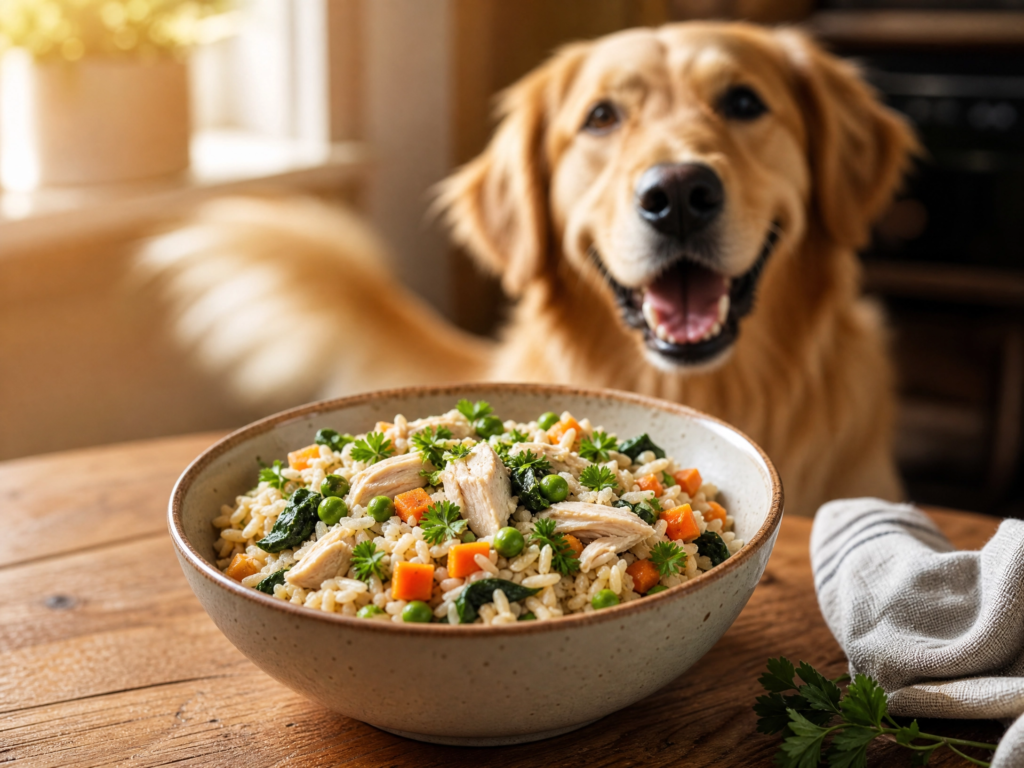
Recipe #1: Simple Chicken & Rice (Perfect for Sensitive Stomachs)
This is the “gateway recipe” for most homemade dog food beginners. It’s gentle, easy to digest, and most dogs go absolutely nuts for it.
Ingredients:
- 2 lbs ground chicken (or boneless chicken thighs, chopped)
- 1 cup brown rice
- 1 cup carrots, finely chopped
- 1/2 cup peas (fresh or frozen)
- 1/2 cup spinach, chopped
- 4 cups water
Instructions:
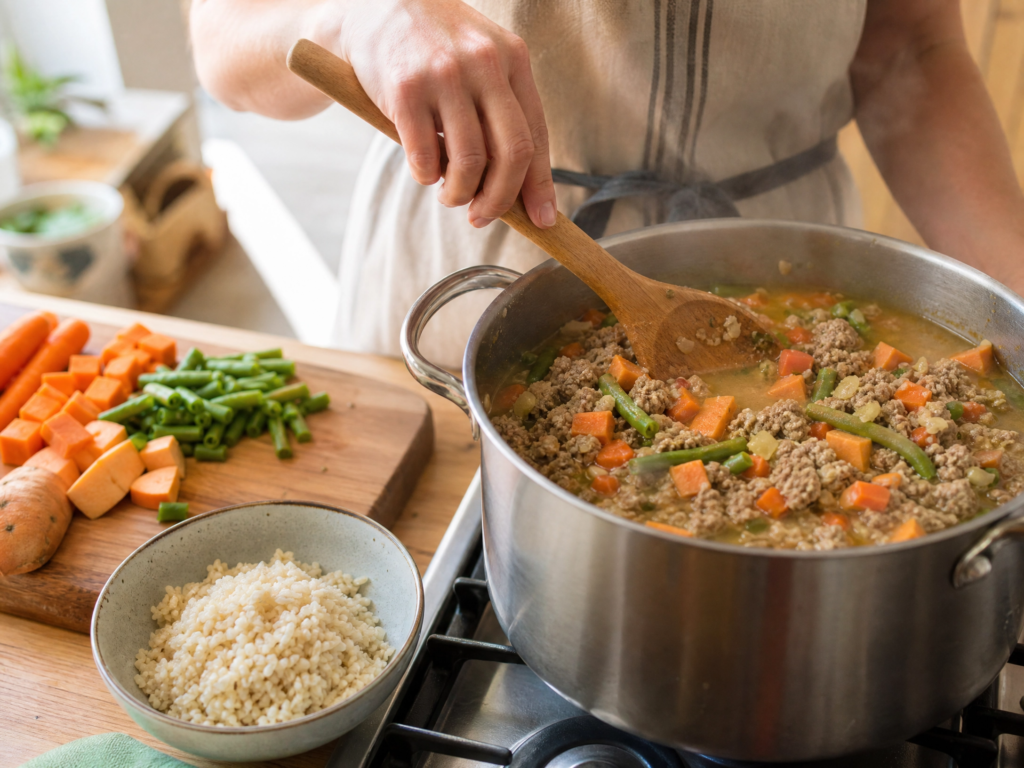
- In a large pot, brown the ground chicken over medium heat. Drain excess fat.
- Add brown rice, carrots, peas, and water. Bring to a boil.
- Reduce heat, cover, and simmer for 20-25 minutes until rice is cooked.
- Stir in spinach and cook for 2 more minutes.
- Let cool completely before serving. (Seriously. Let it cool. Burnt tongues are sad tongues.)
Storage: Refrigerate for up to 4 days or freeze for 3 months.
Recipe #2: Beef & Sweet Potato Bowl (Great for Active Dogs)
Higher in protein and complex carbs, this recipe is fantastic for energetic pups who need sustained fuel.
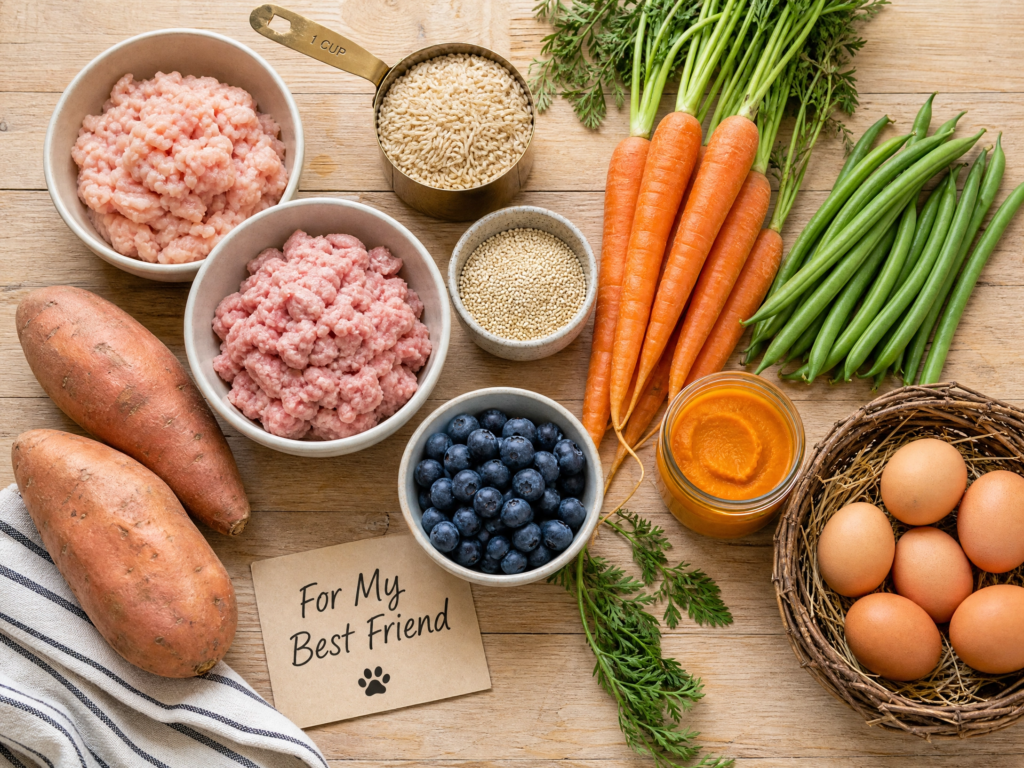
Ingredients:
- 2 lbs lean ground beef (85/15 or leaner)
- 2 medium sweet potatoes, peeled and cubed
- 1 cup green beans, chopped (fresh or frozen)
- 1/2 cup blueberries
- 2 eggs (scrambled)
- 2 tbsp fish oil (for omega-3s)
Instructions:
- Brown ground beef in a large skillet. Drain fat thoroughly.
- Meanwhile, boil or steam sweet potato cubes until fork-tender (about 15 minutes).
- In a separate pan, scramble the eggs.
- Combine beef, sweet potatoes, green beans, blueberries, and scrambled eggs in a large bowl.
- Drizzle with fish oil and mix well.
- Cool completely before serving.
Pro Tip: Buy frozen vegetables! They’re just as nutritious as fresh, way cheaper, and already chopped.
Recipe #3: Turkey & Quinoa Medley (Grain-Free Option)
Not all dogs tolerate grains well. This recipe uses quinoa—a complete protein that’s technically a seed, not a grain.
Ingredients:
- 2 lbs ground turkey
- 1 cup quinoa, rinsed
- 1 cup zucchini, chopped
- 1 cup pumpkin puree (not pumpkin pie filling!)
- 1/2 cup plain Greek yogurt (unsweetened)
- 2 cups low-sodium chicken broth
Instructions:
- Brown ground turkey in a large pot over medium heat. Drain fat.
- Add quinoa, zucchini, pumpkin puree, and chicken broth.
- Bring to a boil, then reduce heat and simmer for 15 minutes until quinoa is fluffy.
- Remove from heat and stir in Greek yogurt.
- Cool completely before serving.
Note on Pumpkin: Pure pumpkin puree (not pie filling) is incredible for digestion. It helps with both constipation AND diarrhea. Magic stuff.
For more information on healthy additions, check out this guide from PetMD on supplements for homemade dog food.
How to Transition Your Dog to Homemade Food
You can’t just switch overnight. Trust me, your dog’s stomach will revolt. Here’s the safe, slow method:
- Days 1-3: 25% homemade, 75% old food
- Days 4-6: 50% homemade, 50% old food
- Days 7-9: 75% homemade, 25% old food
- Day 10+: 100% homemade
Watch for any digestive upset during this transition. A little loose stool is normal. Vomiting or refusal to eat? Slow down or call your vet.
Portion Sizes: How Much Should You Feed?
This is the #1 question I get. And the honest answer? It depends.
A rough starting point: Feed about 2-3% of your dog’s ideal body weight per day.
Example: A 50-pound dog needs about 1 to 1.5 pounds of food daily, split into two meals.
Adjust based on:
- Age (puppies need more, seniors less)
- Activity level (working dogs need more, couch potatoes less)
- Metabolism (just like people, every dog is different)
The best method: Use your eyes and hands. You should be able to feel your dog’s ribs without pressing hard, but not see them. Visible ribs? Feed more. No ribs at all? Feed less.
Your Homemade Dog Food FAQs, Answered!
Q1: Is homemade dog food cheaper than kibble?
It can be, but not always. Basic recipes with chicken and rice are often cheaper than premium kibble. But if you’re using organic meats and specialty ingredients, it’ll cost more. The real value isn’t just money—it’s knowing exactly what your dog is eating.
Q2: Can I just cook meat and vegetables without supplements?
Not long-term. Most homemade dog food recipes require added calcium, omega-3s, and certain vitamins that aren’t naturally present in sufficient amounts. A simple dog multivitamin or a canine-specific supplement powder can fill these gaps. Ask your vet for recommendations.
Q3: How long does homemade dog food last in the fridge?
About 3-4 days in an airtight container. For longer storage, portion into freezer-safe bags or containers and freeze for up to 3 months. Thaw overnight in the refrigerator before serving.
Q4: My dog is a picky eater. Will homemade food help?
Almost always, yes. Fresh, warm, aromatic food is infinitely more appealing than dry kibble. Many picky eaters who “grazed” all day become enthusiastic eaters when switched to homemade. Just be patient during the transition.
Q5: Do I need to add supplements to homemade dog food?
For short-term feeding (a week or two), no. For long-term feeding, yes. Common supplements include calcium (crucial for bone health), fish oil (for coat and joints), and a multivitamin. The World Small Animal Veterinary Association recommends consulting a veterinary nutritionist for long-term homemade diets.
Q6: Can puppies eat homemade dog food?
Yes, but puppy nutrition is much more demanding than adult dog nutrition. Growing puppies need precise calcium-to-phosphorus ratios and higher protein levels. If you’re feeding a puppy homemade food, work closely with your veterinarian or a board-certified veterinary nutritionist.
Q7: What vegetables are best for dogs?
Dog-friendly vegetables include carrots (great for teeth), green beans (low calorie), spinach (iron-rich), broccoli (in small amounts), sweet potatoes (fiber and vitamin A), pumpkin (digestion), and cucumbers (hydration). Always cook vegetables to break down cell walls for better nutrient absorption.
A Sample Weekly Meal Plan
| Day | Breakfast | Dinner |
|---|---|---|
| Monday | Chicken & Rice | Beef & Sweet Potato |
| Tuesday | Turkey & Quinoa | Chicken & Rice |
| Wednesday | Beef & Sweet Potato | Turkey & Quinoa |
| Thursday | Chicken & Rice | Beef & Sweet Potato |
| Friday | Turkey & Quinoa | Chicken & Rice |
| Saturday | Beef & Sweet Potato | Turkey & Quinoa |
| Sunday | Rotate favorite or try something new! |
Variety is important! Different proteins provide different amino acid profiles. Different vegetables provide different vitamins. Rotating prevents boredom and ensures balanced nutrition.
Conclusion: Your Dog’s Healthiest Chapter Starts Now
Look, I’m not going to pretend that making homemade dog food takes zero effort. It takes more effort than opening a bag and scooping. That’s just the truth.
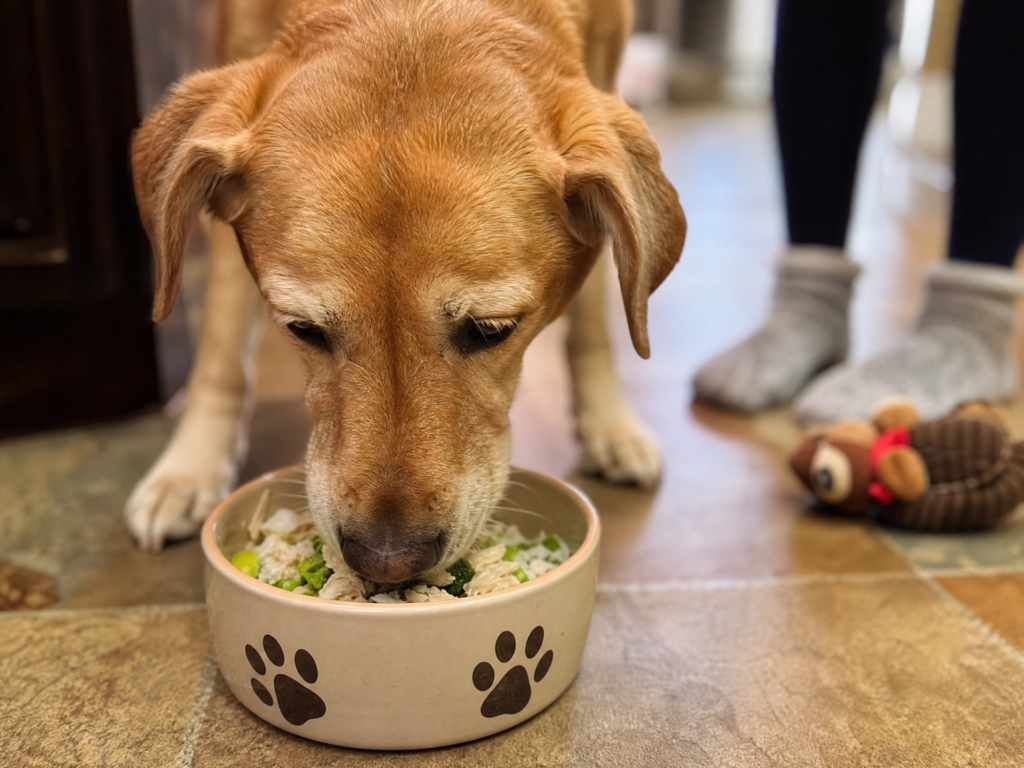
But here’s the other truth. Every time I watch my dog’s tail spin in happy circles when I pull her homemade food from the fridge, I know it’s worth it. Every time someone asks, “Wow, your dog’s coat is so shiny—what do you feed her?” I feel proud.
You now have everything you need to start. The rules, the recipes, the portion guidelines, and the confidence to do it right.
Start small. Try the Simple Chicken & Rice recipe this weekend. See how your dog reacts. Watch their eyes light up. And then keep going.
I’d love to hear from you! Have you tried making homemade food for your dog? What’s their favorite protein? Drop a comment below and share your experience. And if this guide helped you, please share it with a fellow dog parent who’s wondering if they could be doing better.
Looking for more? Check out our guide on dog-safe fruits and vegetables or how to read pet food labels like a pro. 🐾