Introduction: The Magic of Turkey’s Beloved Boat Bread
I still remember the first time I stepped into a bustling pideci (pide bakery) in Istanbul. The air was thick with the aroma of wood smoke, sizzling butter, and freshly baked bread. A man in a flour-dusted apron was sliding long, golden boats into a blazing stone oven, their surfaces bubbling with cheese and minced meat. When my order arrived—a perfectly blistered Turkish Pide topped with spiced lamb and a runny egg—I knew I’d found something special.
If you’re new to Turkish cuisine, think of pide as Turkey’s answer to pizza—but that’s just the starting point. With its soft, chewy dough, distinctive boat shape, and toppings that range from simple cheese to spicy sausage, Turkish Pide is a culinary experience all its own. Whether you’re planning a trip to Turkey, looking to try a new recipe at home, or simply curious about global comfort foods, this guide will walk you through everything you need to know.
Let’s dive into the warm, wonderful world of pide!
What Exactly is Turkish Pide?
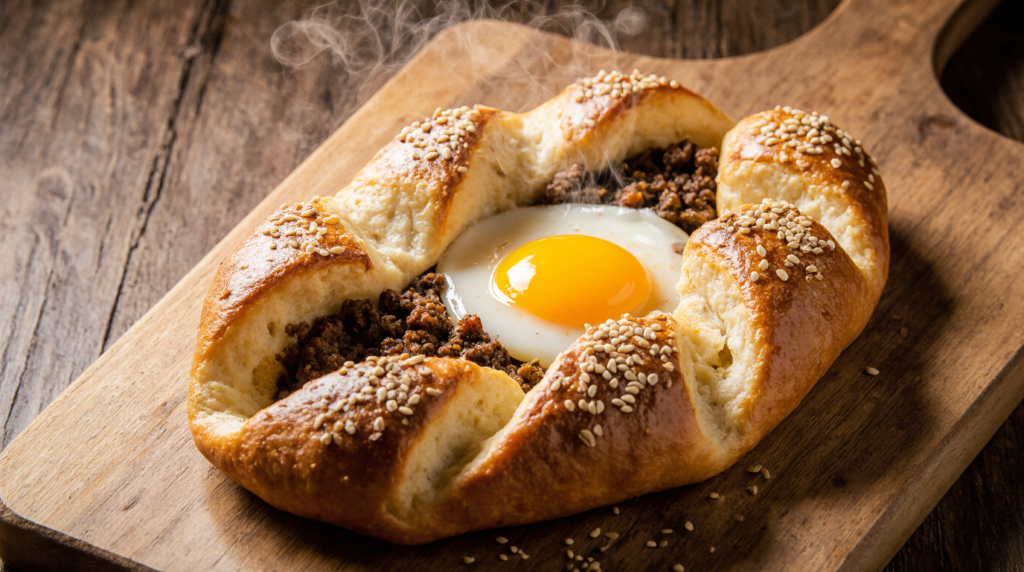
At its heart, pide (pronounced pee-DEH) is a leavened flatbread, traditionally baked in a wood-fired stone oven called a taş fırın. What makes it instantly recognizable is its iconic boat shape—a long oval of soft dough with the edges folded over to create a rim that holds the fillings inside.
The dough itself is simple but special. Made from flour, water, yeast, a touch of sugar, and salt, many traditional recipes also include a bit of milk or yogurt, which gives the crust its signature tenderness and slight richness. After a slow rise, the dough is stretched by hand, topped with any number of delicious ingredients, and slid into an intensely hot oven. In just a few minutes, it emerges puffed, golden, and often brushed with melted butter for an extra layer of indulgence.
A Bite of History: Pide Through the Ages
Pide isn’t a modern invention; its roots run deep in Anatolian history. The word itself is thought to derive from the Greek “pita,” reflecting the long, shared tradition of flatbreads across the Eastern Mediterranean. But pide as we know it today truly came into its own during the Ottoman Empire.
Historical records show that as early as 1502, during the reign of Sultan Bayezid II, there were laws regulating the quality of pide dough—requiring it to be purer and finer than ordinary bread. Back then, pide was often round and flat, more like what we might call “pizza pide” today. Over centuries, as it spread from the palace kitchens to the streets, regions across Turkey developed their own styles and fillings, transforming pide into the beloved national dish it is now.
For more on Turkey’s rich culinary heritage, check out this detailed resource on Ottoman cuisine.
Pide vs. The World: How Does It Compare?
One of the most common questions I hear is, “Isn’t it just Turkish pizza?” While they’re both delicious, lumping them together misses what makes each special. Let’s clear up the confusion.
Turkish Pide vs. Italian Pizza
Calling pide “Turkish pizza” is a convenient shortcut, but the differences are significant. Here’s a quick comparison:
| Feature | Turkish Pide | Italian Pizza |
|---|---|---|
| Shape | Long, oval, boat-shaped with folded edges | Round with a raised outer crust |
| Dough | Soft, fluffy, bread-like; often enriched with milk/yogurt | Varies from thin/crispy to chewy; typically just flour, water, yeast, salt |
| Sauce | Rarely uses tomato sauce; flavor comes from toppings | Tomato sauce is fundamental to most classic pizzas |
| Cheese | Turkish cheeses like kaşar (mild, melty) or lor (crumbly) | Primarily mozzarella, often with Parmesan or Pecorino |
| Serving | Often brushed with butter, sliced into strips, eaten by hand | Sliced into wedges, eaten by hand or with knife and fork |
Pide vs. Lahmacun: A Common Turkish Confusion
This is another classic mix-up, even among seasoned food lovers. Both are Turkish flatbreads, but they’re fundamentally different:
- Lahmacun (lah-ma-JOON) is an ultrathin, crispy round of dough topped with a sparse layer of spiced minced meat, finely chopped vegetables, and herbs. It has no cheese. You roll it up with fresh parsley and a squeeze of lemon and eat it like a wrap.
- Pide has a thick, soft, chewy dough. The toppings are more substantial and contained within the folded “walls” of the boat. It’s a heartier, fork-and-knife (or hand-held strip) meal.
Think of lahmacun as a light, roll-up snack, while pide is a satisfying, sit-down meal. If you’re curious about lahmacun, check out our guide to [Homemade Lahmacun: The Ultimate Turkish “Pizza”].
The Wonderful World of Pide Varieties
One of the joys of exploring Turkish Pide is the incredible variety of fillings. While creative modern versions abound, these are the classic types you’ll find in any good pideci.
Kıymalı Pide (Minced Meat Pide)
This is the most popular and beloved variety across Turkey. The filling is a savory mixture of ground beef or lamb, finely chopped onions, tomatoes, green peppers, and parsley, seasoned with black pepper and paprika. As it bakes, the meat juices seep into the soft bread, creating an incredibly flavorful experience.
Kuşbaşılı Pide (Diced Meat Pide)
For meat lovers who crave texture, this is the one. Kuşbaşılı means “bird-head-sized,” referring to the small, tender cubes of marinated lamb or beef that top the pide. The meat is often sautéed with tomatoes and peppers before baking. For the ultimate version, look for yumurtalı kuşbaşılı pide—with a fresh egg cracked in the center during the last minutes of baking, creating a perfectly runny yolk for dipping the crust.
Peynirli Pide (Cheese Pide)
The go-to choice for vegetarians and cheese lovers. Peynirli simply means “with cheese.” It’s typically filled with kaşar, a smooth, melty Turkish cheese similar to mild mozzarella or cheddar. Sometimes it’s a mix of cheeses, and it’s often served with an egg on top (yumurtalı). Simple, comforting, and absolutely delicious.
Sucuklu Pide (Spicy Sausage Pide)
Sucuk is a dry, cured, and spicy Turkish sausage with a powerful garlicky flavor. When sliced and layered on pide, it releases its aromatic oils into the bread as it bakes. It’s often combined with kaşar cheese for a match made in heaven.
Ispanaklı Pide (Spinach Pide)
A fantastic vegetarian option. Sautéed spinach mixed with onions and often crumbled feta cheese creates a filling that’s both wholesome and flavorful.
How to Eat Pide Like a Local
Knowing how to eat pide enhances the experience. Here’s the inside scoop:
- Use Your Hands: Forget the knife and fork (unless you prefer them). Pide is traditionally eaten with your hands.
- It’s Already Sliced: A whole pide is typically brought to the table on a long wooden board, already sliced into 1- to 2-inch wide strips across its width. Just pick up a strip and enjoy.
- Dip That Crust: If you ordered an egg-topped (yumurtalı) pide, the first move is a classic: tear off a piece of the crusty end and dip it directly into the runny yolk. Pure bliss.
- What to Drink: Pide pairs perfectly with ayran, Turkey’s national yogurt drink—salty, tangy, and refreshing, it cuts through the richness of the bread and fillings beautifully. A glass of tangy şalgam (fermented turnip juice) is another traditional favorite, especially in southern Turkey.
🫓 Turkish Pide
Ingredients
Equipment
Method
- In a bowl, mix flour, salt, sugar, and yeast.
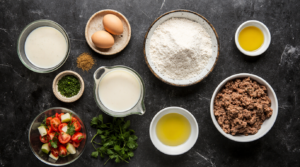
- Add warm water and olive oil, then knead until a soft dough forms.
- Cover and let rise for 1 hour or until doubled in size.
- Preheat oven to 220°C (425°F).
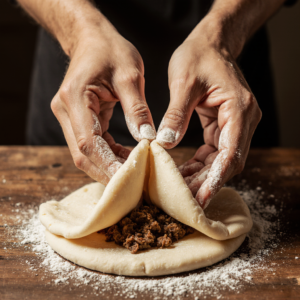
- Divide dough into 4 equal pieces and roll into oval shapes.
- Fold the edges slightly inward to create a boat shape and pinch the ends.
- Add desired filling to the center.
- Bake for 12–15 minutes until golden.
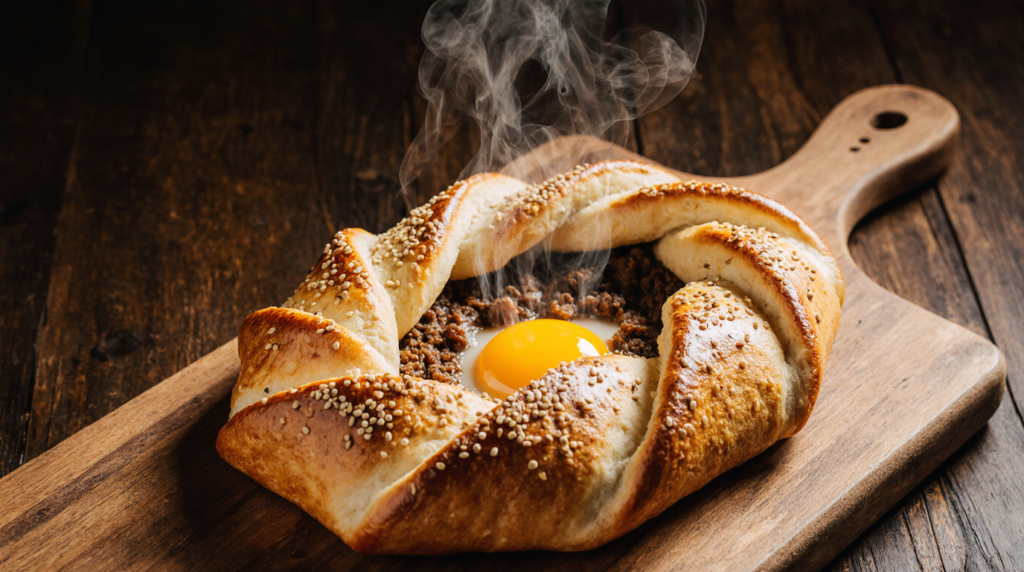
- Add an egg on top during the last 3 minutes if using.
- Serve hot.
Notes
- Brush edges with egg wash or olive oil for shine.
- Sprinkle sesame or nigella seeds on the crust.
- Serve with yogurt or fresh salad.
✨ Final Result & Serving Suggestions
When done right, your homemade Turkish Pide will be absolutely stunning. The crust should be beautifully golden with darker spots from the intense heat. The folded edges will be crisp on the outside yet soft and pillowy inside from the butter wash. The filling will be juicy, aromatic, and perfectly cooked.
- Serve it traditionally on a long wooden board or large platter, already sliced into 1-2 inch wide strips.
- Pair it with a side of fresh meze like haydari (thick herbed yogurt dip), a simple tomato-cucumber salad, and plenty of lemon wedges.
- Don’t forget the drink! A tall glass of cold, frothy ayran is the perfect companion—its tangy saltiness cuts through the richness beautifully.
- Storage: Leftover pide can be stored in an airtight container in the refrigerator for up to 3 days. Reheat in a 350°F oven for 5-7 minutes to bring back the crust’s crispness.
🧑🍳 Beginner Troubleshooting Tips
| Problem | Likely Cause | Solution |
|---|---|---|
| Dough is too sticky | Too much water or humidity | Add flour one tablespoon at a time while kneading until smooth |
| Dough won’t rise | Yeast is old or liquid was too hot | Always check yeast expiry; water should feel like warm bathwater |
| Bottom isn’t crisp | Oven wasn’t hot enough | Preheat thoroughly and use a pizza stone if possible |
| Filling is dry | Meat was too lean | Use meat with 20% fat; don’t overbake |
| Folded edges open during baking | Edges weren’t sealed well | Press folds firmly; a little water on your fingers helps them stick |
Your Turkish Pide FAQs, Answered!
Q1: How do you pronounce “Pide” correctly?
It’s simple: pee-DEH. The emphasis is on the second syllable, and the “e” is short, like the “e” in “egg”.
Q2: Is Pide healthy?
Like any food, it depends on the toppings and portion size. The dough provides energy from carbohydrates, and meat or cheese fillings offer protein. For a lighter option, choose a vegetable-filled pide (ıspanaklı or sebzeli) and pair it with a fresh salad. As with all good things, moderation is key.
Q3: Can I find vegetarian Pide options?
Yes, absolutely! The most common vegetarian pide is Peynirli Pide (cheese). You’ll also often find Ispanaklı Pide (spinach and cheese) and Patatesli Pide (spiced potato) on menus.
Q4: What’s the difference between Pide and “Ramazan Pidesi”?
This is an important distinction. Ramazan Pidesi is a special round, flat, and soft bread traditionally eaten during the holy month of Ramadan. It’s typically topped with sesame seeds and sometimes nigella seeds, but it’s not filled with any toppings. It’s plain bread, used for sopping up meals or eating with cheese and olives. The pide we’re discussing in this guide is the filled, baked version.
Q5: Can I freeze leftover Pide?
Yes, you can! Allow the pide to cool completely. Wrap it tightly in plastic wrap, then in aluminum foil, or place it in a freezer-safe bag. It will keep for up to 3 months. To reheat, thaw in the refrigerator overnight, then warm it in a 350°F (175°C) oven for about 10 minutes to restore its crispness.
Q6: Where can I try authentic Pide outside of Turkey?
Many cities with vibrant Turkish communities have excellent pideci restaurants. Look for places with stone ovens and menus featuring the classic varieties we discussed. Reading recent reviews on sites like Google Maps or Yelp can help you find the most authentic spots near you.
Conclusion: Your Pide Adventure Starts Now
From its ancient Ottoman roots to its place as modern Turkey’s ultimate comfort food, Turkish Pide is a dish that deserves a spot on every food lover’s bucket list. Whether you’re savoring a butter-brushed kuşbaşılı pide in a bustling Istanbul shop or pulling a golden, homemade version from your own oven using the recipe above, the experience is unforgettable.
The world of pide is rich, varied, and deeply satisfying. So go ahead—find a local spot, try the recipe at home, or start planning that trip to Turkey. Your taste buds will thank you.
Have you ever tried Turkish Pide? What’s your favorite variety—or which one are you most excited to make? Drop a comment below and share your pide stories! And if you enjoyed this guide, please share it with a friend who needs more delicious food in their life.