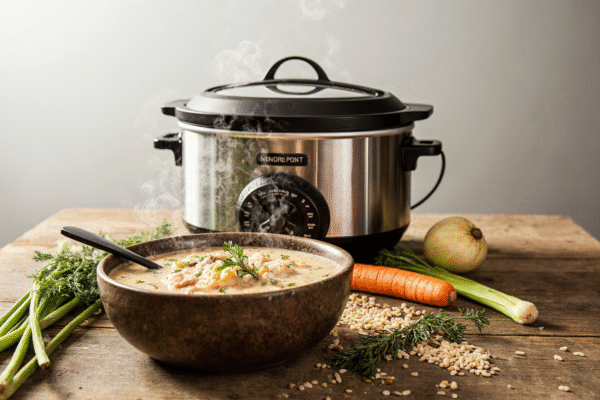
There’s a specific kind of alchemy that happens when you transform a few humble potatoes, an onion, and some broth into a bowl of liquid comfort. I learned this not from a fancy cookbook, but from my grandmother. On blustery autumn days, the scent of her potato soup recipe would fill the entire house, acting as a culinary hug long before you ever took a spoonful. For years, I couldn’t replicate her magic. My soups were either gluey, bland, or just… sad.
The breakthrough came when I stopped treating it as a simple dump-and-stir operation and started understanding the why behind each step. This potato soup recipe is the culmination of that journey—a foolproof path to a velvety, deeply flavorful soup that feels like a warm blanket for your soul. It’s the kind of recipe that turns beginners into confident cooks and becomes a cherished staple in your kitchen.
Table of Contents
Why This Potato Soup Recipe is a Game-Changer
Before we dive into the pot, let’s talk about what makes this potato soup recipe stand out. Many recipes end up watery, bland, or overly heavy. This one strikes a perfect balance, achieving a creamy texture without relying on a ton of heavy cream, and building layers of flavor from the very first step.
According to the Idaho Potato Commission, the type of potato you choose dramatically affects the final texture of your soup. This is a crucial first step many beginners miss!
What makes this soup special:
- Velvety texture that’s creamy but not overly rich
- Deep, savory flavor built from a solid foundation
- Customizable consistency from chunky to perfectly smooth
- Comfort in a bowl that feels both nourishing and indulgent
The Science of a Great Potato Soup Base
The secret to a soup that tastes like it simmered for hours (when it really only took about 45 minutes) is building a flavorful foundation. This process, known as creating a soffritto or flavor base, is what professional chefs do to build depth.
The flavor-building process:
- Sautéing aromatics (onions, garlic) to release their sweet, savory notes
- Creating a roux (butter and flour mixture) to thicken the soup beautifully
- Deglazing the pot with broth to capture all the caramelized bits
- Simmering gently to cook the potatoes and meld the flavors
Gathering Your Ingredients: A Simple List for Big Flavor
The beauty of this potato soup recipe is its simplicity. You likely have most of these ingredients in your kitchen right now.
The Foundation:
- 3 tablespoons unsalted butter
- 1 large yellow onion, chopped
- 3 cloves garlic, minced
- ⅓ cup all-purpose flour
- 6 cups chicken or vegetable broth
- 2 ½ pounds russet potatoes, peeled and cubed
The Flavor Enhancers:
- 1 teaspoon dried thyme
- 1 bay leaf
- 1 cup whole milk or half-and-half
- 1 cup shredded sharp cheddar cheese
- Salt and black pepper to taste
The Classic Garnishes:
- Crumbled cooked bacon
- Sliced green onions or chives
- Sour cream
- Extra shredded cheese
Your Foolproof Step-by-Step Potato Soup Recipe
Step 1: Build the Flavor Base
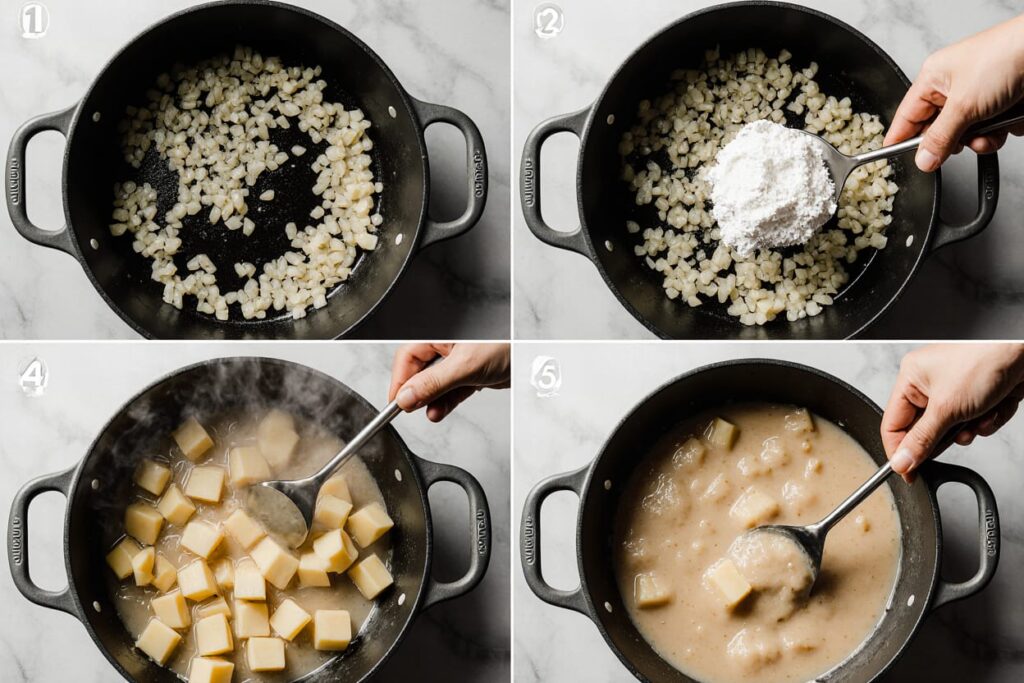
Melt the butter in a large Dutch oven or heavy-bottomed pot over medium heat. Add the chopped onion and cook until soft and translucent, about 5-7 minutes. Stir in the minced garlic and cook for another minute until fragrant.
Why this matters: Taking your time here develops a sweet, savory foundation that will carry through the entire soup. Rushing this step means a flatter-tasting soup.
Step 2: Create the Roux
Sprinkle the flour over the onion and garlic mixture. Cook, stirring constantly, for about 2 minutes. The mixture will look like a thick paste. This cooks the raw flour taste out and will be what thickens your soup to velvety perfection.
Step 3: Slowly Add Liquid
Gradually pour in the broth, whisking constantly to prevent any lumps from forming. This might feel tedious, but it’s the secret to a smooth, non-lumpy soup. Bring the mixture to a gentle simmer.
Step 4: Cook the Potatoes
Add the cubed potatoes, dried thyme, and bay leaf. Bring the soup back to a simmer, then reduce the heat to low, cover, and cook for 15-20 minutes, or until the potatoes are fork-tender.
Pro tip: Cut your potatoes into uniform, ½-inch cubes so they cook evenly. No one wants a mix of mushy and undercooked potatoes!
Step 5: Creamify and Serve
Remove the bay leaf. For a chunky soup, you can proceed as is. For a creamy soup, use a potato masher to break down the potatoes to your desired consistency, or use an immersion blender for a few seconds for a semi-smooth texture.
Stir in the milk or half-and-half and the shredded cheddar cheese until the cheese is melted and the soup is heated through. Season generously with salt and pepper.
Ladle into bowls and top with all your favorite garnishes.
The Potato Power: Choosing Your Spuds Wisely
Not all potatoes are created equal, especially in soup! Your choice will directly impact the texture.
Russet Potatoes: (The classic choice) High starch content, they break down easily and thicken the soup naturally. Result: Thick, creamy texture.
Yukon Gold Potatoes: (The all-rounder) Medium starch, they hold their shape a bit better while still contributing to creaminess. Result: Creamy with some soft chunks.
Red Potatoes: (The waxy option) Low starch, they hold their shape very well. Result: A brothier soup with distinct potato pieces.
Pro Tips for Soup Perfection
- Don’t skip the roux: It’s your primary thickening agent and ensures a smooth, not gloopy, texture.
- Season in layers: Add a pinch of salt when sautéing onions, and again after adding the broth, and do a final seasoning at the end. This builds a more complex flavor profile.
- Avoid boiling after adding dairy: Once you’ve added the milk or cream, keep the soup hot but don’t let it boil, as it can cause the dairy to separate.
- Garnish generously: Toppings like bacon, cheese, and chives add crucial textural contrast and bursts of flavor.
3 Delicious Variations to Keep It Interesting
- Loaded Baked Potato Soup: Stir in ½ cup of sour cream with the milk. Top with extra cheddar, bacon, sliced green onions, and a dollop of sour cream.
- Cheesy Broccoli Potato Soup: In the last 5 minutes of cooking the potatoes, add 2 cups of small broccoli florets. Proceed with the recipe and use a full 2 cups of shredded cheese.
- Leek and Potato Soup: Replace the onion with 2 large leeks (white and light green parts only, thoroughly washed and sliced). It’s a classic, elegant twist.
Storing and Reheating Your Masterpiece
- Refrigerator: Cool completely and store in an airtight container for up to 4 days.
- Freezer: This potato soup recipe freezes well for up to 3 months. Thaw overnight in the fridge. Note: Soups with dairy can sometimes separate slightly when frozen and reheated. A good whisk when reheating will bring it back together.
- Reheating: Gently warm on the stovetop over medium-low heat, stirring occasionally. You may need to add a splash of broth or milk to loosen it up.

Frequently Asked Questions
1. Can I make this potato soup recipe in a slow cooker?
Absolutely! Sauté the onion and garlic, then add them to the slow cooker with the potatoes, broth, and thyme. Cook on LOW for 6-8 hours or HIGH for 3-4 hours. Before serving, mash the potatoes, then stir in a roux (melt 3 tbsp butter, whisk in ⅓ cup flour, and slowly whisk in 1 cup of the hot soup liquid) to thicken it. Then stir in the milk and cheese.
2. Why is my potato soup gluey?
Over-blending can cause the starch in the potatoes to become gummy. If using a blender, pulse gently rather than running it continuously. A potato masher or immersion blender is often a safer bet.
3. How can I make this soup vegan?
It’s easy! Use olive oil instead of butter, vegetable broth, and full-fat canned coconut milk or a unsweetened plant-based cream instead of dairy milk/cream. Omit the cheese or use a vegan alternative.
4. My soup is too thin. How can I thicken it?
Create a beurre manié by mashing equal parts soft butter and flour into a paste. Whisk this into the simmering soup a little at a time until it reaches your desired consistency.
5. Can I use pre-shredded cheese?
You can, but be aware that pre-shredded cheese is coated with anti-caking agents (like potato starch) which can make your soup slightly less smooth. For the creamiest result, shred your own cheese from a block.
6. What’s the best way to reheat leftover potato soup?
Always reheat it gently on the stovetop, stirring frequently. The microwave can heat it unevenly and may cause the dairy to separate.
7. Is it necessary to peel the potatoes?
For the smoothest, most velvety texture, yes, peeling is recommended. However, for a more rustic, chunky soup, you can leave the skins on—just be sure to scrub them thoroughly first.
A Bowl Full of Comfort Awaits
This potato soup recipe is more than just a list of ingredients and steps; it’s a formula for creating a moment of pure comfort. It’s about the transformative power of simple, good food. Whether you’re cooking for a crowd on a game day, meal-prepping for a busy week, or simply needing a warm pick-me-up, this soup delivers every single time.
So, grab your favorite pot and a wooden spoon. Your new go-to potato soup recipe—the one that will have friends and family asking for the secret—is waiting for you to bring it to life.
I’d love to hear about your soup-making journey! Did you stick with the classic or try a fun variation? What’s your ultimate favorite topping? Share your creations and stories in the comments below. Let’s build a community of comfort food lovers!