Introduction
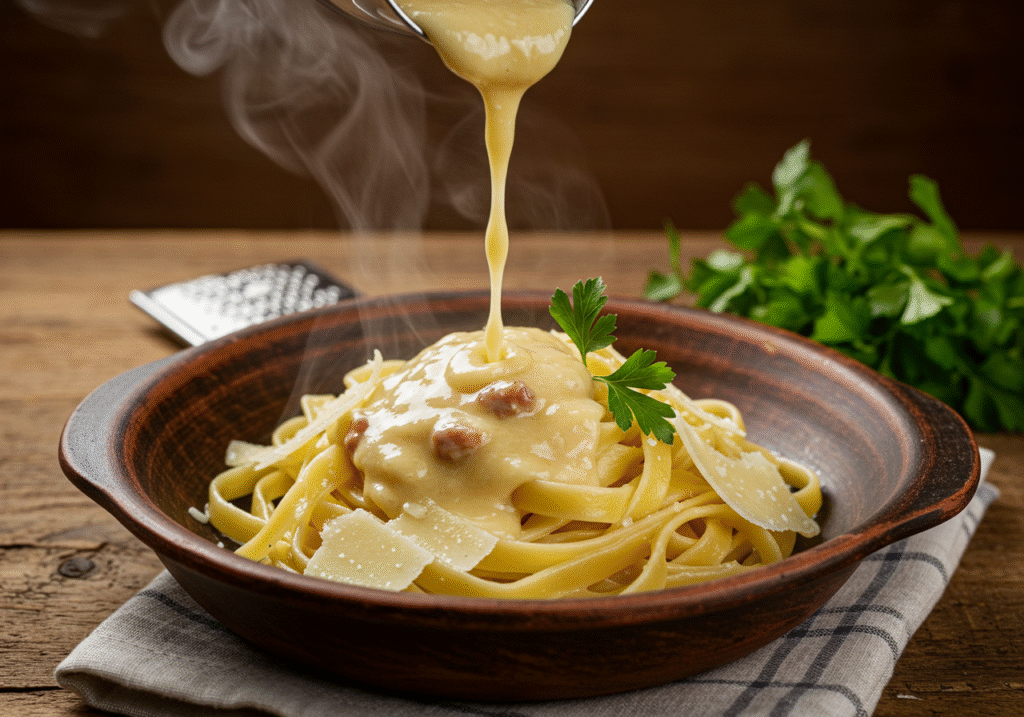
We’ve all been there – staring into the fridge after a long day, craving something comforting yet effortless. That’s when pasta calls your name, but not just any pasta. You dream of that velvety, restaurant-quality creamy pasta sauce that transforms simple ingredients into a memorable meal. If you’ve ever wondered how to create that magic in your own kitchen without complicated techniques or mysterious ingredients, you’ve come to the right place. This guide will walk you through creating a spectacular creamy pasta sauce that will become your new culinary superpower.
Table of Contents
Why This Sauce Recipe Will Change Your Cooking Game
What makes this particular creamy pasta sauce recipe so special for beginners? Let me share what I’ve learned through years of kitchen experiments:
- It Builds Confidence: This sauce follows reliable principles that work every time, helping you develop intuition for creating other sauce recipes.
- Teaches Fundamental Techniques: You’ll master the art of making a perfect roux and properly incorporating dairy – skills that translate to countless other dishes.
- Adapts to Your Preferences: Love garlic? Add more. Prefer a lighter version? We’ve got adjustments for that. This recipe celebrates customization.
- Weeknight Friendly: In about the time it takes to boil water and cook pasta, you can create a sauce that tastes like it simmered for hours.
The Essential Components: Getting to Know Your Ingredients
Understanding your ingredients is the first step toward cooking with confidence. Here’s what makes this sauce work:
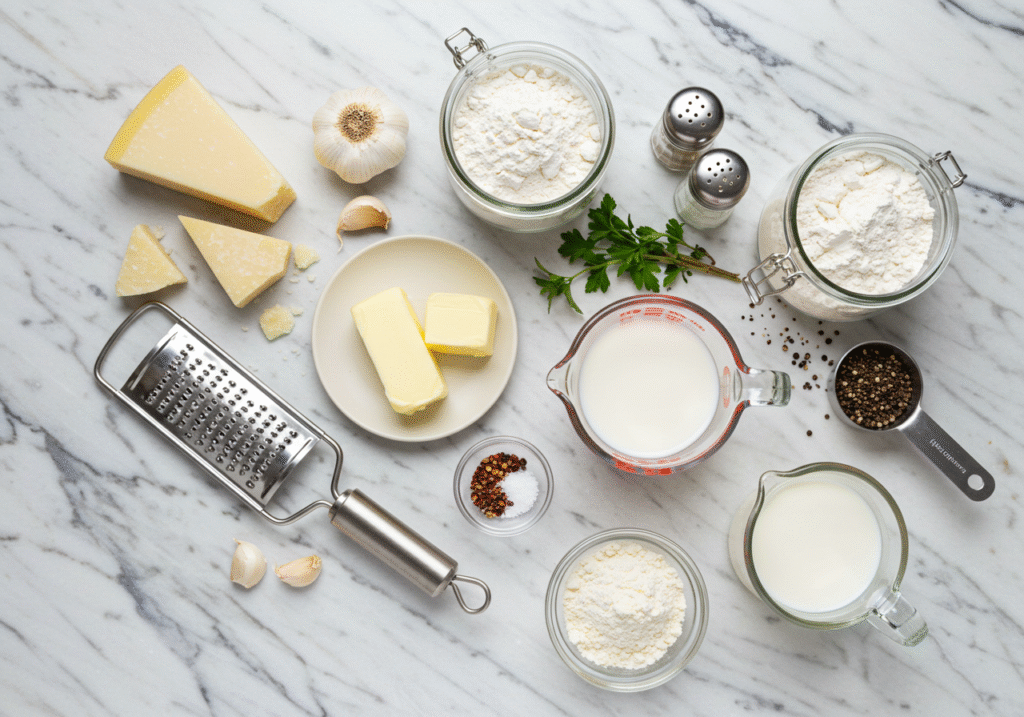
The Foundation Trio
- Quality Butter (3 tablespoons): This isn’t just fat – it’s your flavor carrier. The milk solids in butter contribute to that rich, rounded taste we love in creamy sauces.
- All-Purpose Flour (3 tablespoons): When combined with butter, it creates what’s called a roux. This mixture acts like tiny sponges that swell when liquid is added, giving your sauce beautiful body.
- Whole Milk (2 cups): The creamy canvas. Whole milk provides the perfect balance of richness and fluidity. If you only have 2%, that works too – the result will still be delicious.
The Flavor Architects
- Fresh Garlic (2-3 cloves): Minced fine to release its aromatic compounds. The difference between fresh and pre-minced garlic is like night and day.
- Real Parmesan Cheese (1 cup): Please trust me on this – buy a wedge and grate it yourself. Pre-shredded cheese contains anti-caking agents that can make your sauce grainy.
- Seasoning Balance: Kosher salt, freshly ground black pepper, and that secret ingredient – a tiny pinch of nutmeg that somehow makes everything taste creamier without being identifiable.
The Foolproof Method: Creating Your Masterpiece
Ready to create some magic? Follow these steps for sauce perfection:
Step 1: Build Your Base
- Melt butter in a heavy-bottomed saucepan over medium heat until it foams gently.
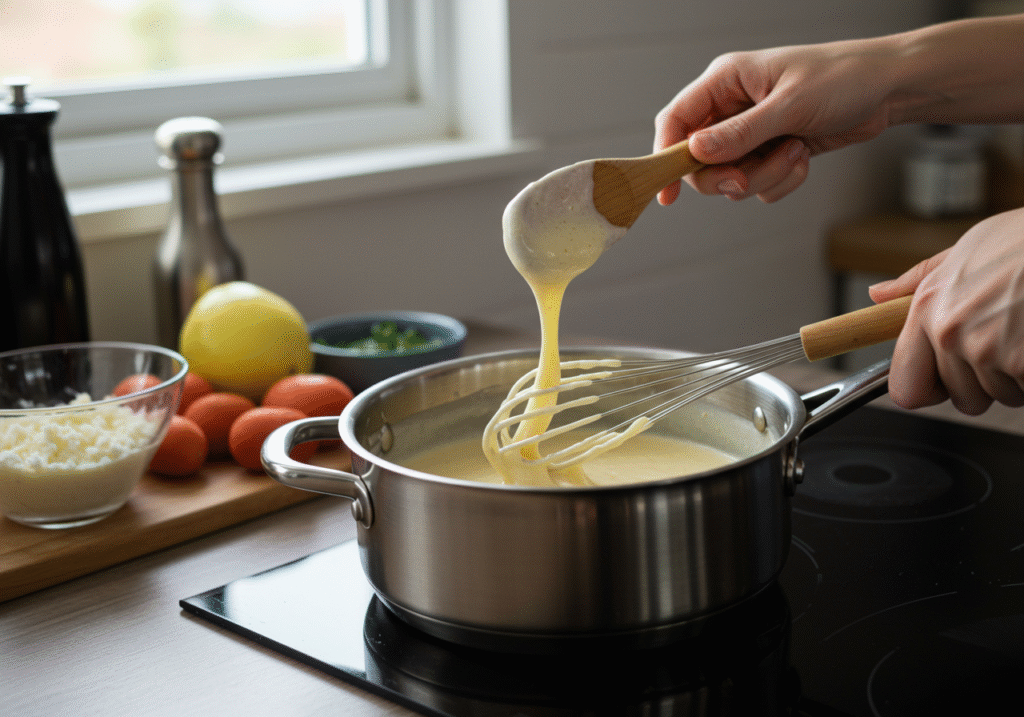
- Add flour while whisking constantly. Cook this roux for about two minutes until it smells pleasantly nutty. This cooking time is crucial for eliminating the raw flour taste.
Step 2: Incorporate Liquid Gradually
- Begin by adding just a quarter-cup of milk while whisking vigorously. The mixture will thicken dramatically – this is normal!
- Once smooth, add another quarter-cup, continuing to whisk until incorporated.
- Now you can add the remaining milk in a steady stream, maintaining that constant whisking motion. This patient approach is what guarantees a silky-smooth result.
Step 3: Develop the Sauce
- Continue cooking, stirring frequently with a wooden spoon, until the sauce thickens enough to coat the back of your spoon.
- Reduce heat to low and stir in your minced garlic. Cook for just sixty seconds – enough to mellow the sharpness but not long enough to brown.
Step 4: The Finishing Flourishes
- Always remove the pan from heat before adding cheese. This simple step prevents the proteins from seizing and creating graininess.
- Stir in your freshly grated Parmesan until it melts into the sauce seamlessly.
- Season with salt, pepper, and that hint of nutmeg. Taste and trust your palate – this is where you make the sauce truly yours.
Pro Tip: If your sauce thickens more than you’d like, whisk in a tablespoon or two of the starchy water from your pasta pot. This magical liquid not only thins the sauce but helps it cling to your noodles.
Beyond the Basics: Creative Variations
Once you’re comfortable with the foundation, try these delicious twists:
- Sun-Dried Tomato & Basil: Add ¼ cup chopped sun-dried tomatoes and 2 tablespoons of fresh basil with the cheese.
- Mushroom & Thyme: Sauté 8 ounces of sliced mushrooms separately, then stir them in with a teaspoon of fresh thyme at the end.
- Spinach & Lemon: Wilt in two handfuls of fresh spinach and add the zest of half a lemon for brightness.
Discover more inspiration with our guide to Perfect Pairings: Pasta Shapes and Their Ideal Sauces.
Your Sauce Questions, Answered
1. Help! My sauce has lumps. What now?
Don’t worry – this is fixable. Strain the sauce through a fine-mesh sieve, pressing the lumps through with a rubber spatula. Alternatively, blend it briefly with an immersion blender.
2. How should I store and reheat leftovers?
Store in an airtight container in the refrigerator for up to 4 days. The sauce will thicken when cold – that’s normal! Reheat gently over low heat, whisking in a splash of milk to restore the perfect consistency.
3. Can I make this sauce ahead of time?
Absolutely. Prepare the sauce completely, let it cool, then refrigerate. The flavors actually improve after melding overnight. Reheat gently before serving.
4. My sauce seems too thin. How can I thicken it?
Let it simmer a bit longer to reduce, or create a quick slurry by mixing one tablespoon of cornstarch with two tablespoons of cold milk, then whisking it into the simmering sauce.
5. Is there a dairy-free version that works?
Yes! Use vegan butter, unsweetened plant-based milk (oat milk works surprisingly well), and either omit the cheese or use a vegan Parmesan alternative.
Conclusion
Creating an exceptional creamy pasta sauce isn’t about complicated techniques or hard-to-find ingredients. It’s about understanding a few simple principles and having the confidence to trust your instincts. You now have everything you need to create pasta dishes that will delight your taste buds and impress anyone lucky enough to share your table.
I’d love to hear about your sauce adventures! Which variation did you try first? What discoveries did you make along the way? Share your experiences and photos in the comments below – your journey might inspire another beginner cook to find their confidence in the kitchen. If this guide helped you create something wonderful, please pass it along to a friend who might appreciate a little kitchen inspiration.
Author Bio: Nora is a culinary enthusiast and cooking instructor dedicated to making sophisticated flavors accessible to home cooks of all levels. Her approach focuses on understanding the “why” behind cooking techniques, empowering students to cook with confidence and creativity.