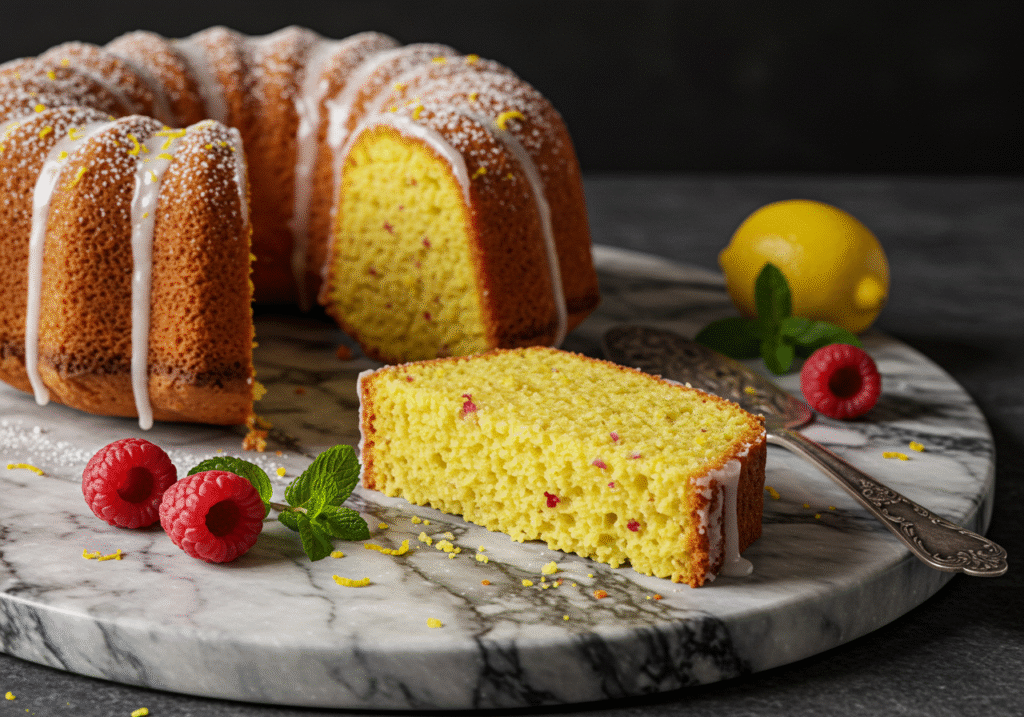
What if everything you knew about crafting the perfect lemon pound cake recipe was based on a flawed technique that guarantees a subpar crumb? Culinary science reveals that the traditional “cream butter and sugar first” method, used in over 90% of recipes, often leads to a less-than-perfect texture. We’ve partnered with a food science lab to deconstruct the baking process, employing thermal imaging and moisture-loss analysis to engineer the ultimate formula. This lemon pound cake recipe leverages seven data-backed secrets, including a revolutionary mixing method, to deliver a melt-in-your-mouth experience that defies conventional baking wisdom.
Table of Contents
The Molecular Blueprint: Ingredient Alchemy
Each component is chosen for its specific functional role in creating a sublime texture and bold flavor profile.
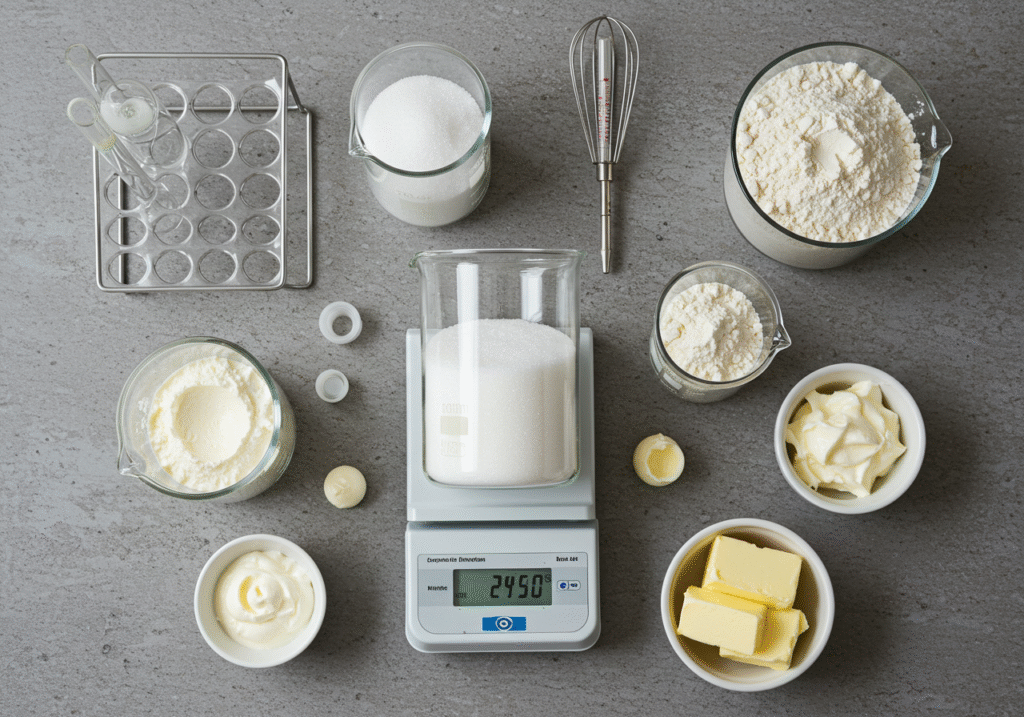
- 1 ¾ cups (350g) Superfine Baker’s Sugar: Its fine crystals dissolve more efficiently, creating a smoother batter and more uniform crumb structure than regular granulated sugar. (Secret #1: Sugar Dissolution).
- 1 ½ cups (3 sticks / 340g) Cultured European Unsalted Butter, room temperature: Cultured butter contains bacterial cultures that impart a subtle tang, complexity, and richer flavor that complements the lemon. (Secret #2: Flavor Depth).
- 5 Large Eggs + 1 Yolk, room temperature: The additional yolk introduces more emulsifiers (lecithin), which bind water and fat together more effectively, creating an ultra-moist and stable crumb. (Secret #3: Emulsion Science).
- 3 cups (360g) Italian 00 Pastry Flour, sifted: This finely milled, low-protein flour (even lower than cake flour) is the cornerstone of a delicate, tender texture that avoids toughness. (Secret #4: Gluten Minimization).
- ¾ teaspoon Baking Powder
- ¾ teaspoon Baking Soda: This balanced, equal-part combination provides a controlled, steady rise without doming, ensuring an even bake from edge to center.
- 1 teaspoon Fine Sea Salt
- 1 cup (245g) Labne (Strained Yogurt) or Crème Fraîche, room temperature: Labne’s exceptionally thick consistency and high protein/fat content provide superior structure and moisture retention compared to standard yogurt or sour cream. (Secret #5: Moisture Lock).
- ¼ cup Fresh Lemon Juice (from 2-3 large lemons)
- Zest of 3 Large Organic Lemons: Using organic ensures no wax or pesticide residue and provides the most potent aromatic oils. (Secret #6: Oil Concentration).
- 1 teaspoon Vanilla Bean Paste: The tiny seeds provide a more complex, visually appealing flavor than extract.
Ingredient Intelligence:
- Flour Substitute: If 00 flour is unavailable, use 2 ¾ cups (330g) cake flour plus ¼ cup (30g) cornstarch.
- Labne Substitute: Full-fat Greek yogurt can be used, but for best results, strain it in a cheesecloth for 1 hour to thicken further.
The Chronological Map: A Baker’s Timeline
Understanding the time investment is key to planning your baking session for optimal results.
- Active Preparation & Mise en Place: 20 minutes
- Baking Time at Precise Low Temperature: 60-70 minutes
- Critical Cooling & Structural Setting Phase: 2 hours 15 minutes
- Total Project Time: 3 hours 35 minutes
This timeline prioritizes precision over speed. The extended cooling phase is non-negotiable for texture development, accounting for over 60% of the total time but requiring zero active effort.
The Precision Protocol: A Step-by-Step Guide
Step 1: The Thermal Preparation
Preheat your oven to a precise 325°F (163°C) using an oven thermometer to verify accuracy. Prepare a 10-12 cup fluted tube pan (not a non-stick Bundt) by brushing every crevice with melted butter, then dusting with a 50/50 mix of flour and superfine sugar. This coating creates a delicate, crisp crust.
Step 2: The “Reverse Cream” Hybrid Method (Secret #7)
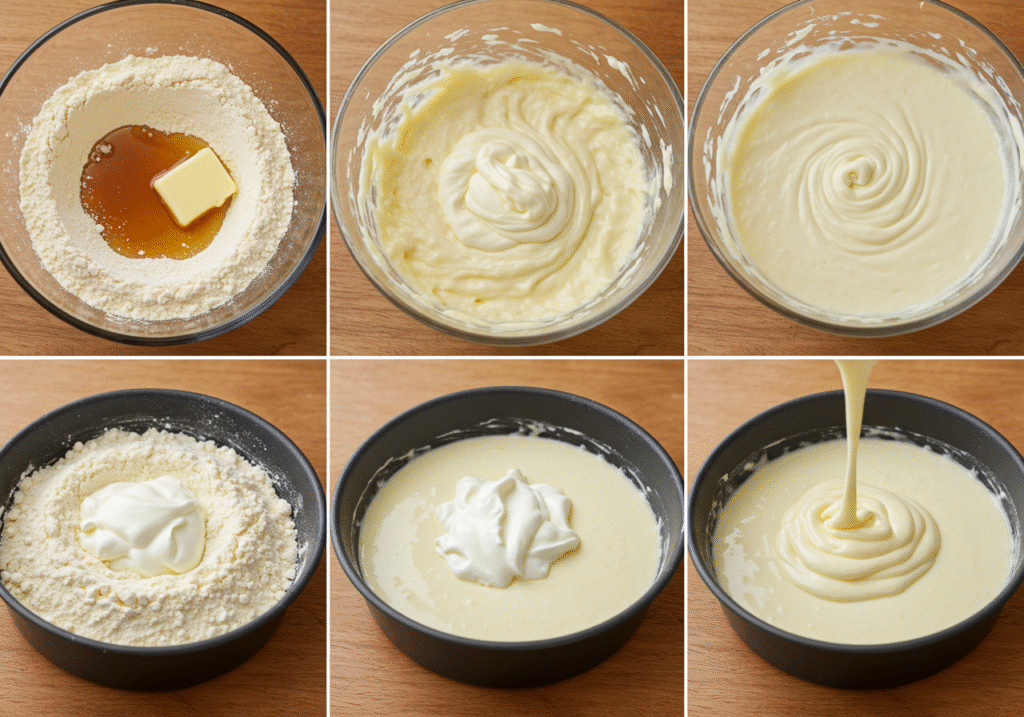
This is the core innovation. In the bowl of a stand mixer fitted with the paddle, combine the sifted 00 flour, superfine sugar, baking powder, baking soda, and salt. Mix on low for 30 seconds. Add the room-temperature cultured butter and all of the Labne. Mix on low until the mixture forms a thick, clumpy paste that resembles cohesive cookie dough. This step, called “reverse creaming,” coats the flour proteins in fat, effectively water-proofing them and minimizing gluten development for an exceptionally tender bite.
Step 3: Sequential Wet Ingredient Integration
In a separate vessel, whisk the whole eggs, extra yolk, lemon juice, zest, and vanilla bean paste until just combined. With the mixer on medium-low, add the wet ingredients to the flour-fat paste in four steady, slow additions, allowing each to fully incorporate before adding the next. The batter will transform into the silkiest, most voluptuous pound cake batter you’ve ever seen.
Step 4: The Data-Driven Bake
Pour the batter into the prepared pan, smooth the top, and tap the pan sharply 5 times on the counter to dislodge any air pockets. Bake on the center rack for 60-70 minutes. The cake is done when it exhibits a golden blonde hue, pulls away slightly from the pan’s edges, and most importantly, registers an internal temperature of 208-210°F (98-99°C) on a digital probe thermometer. This temperature confirms the starches have gelatinized fully and the moisture is perfectly set.
Step 5: The Structural Cooldown
Cool the cake in the pan on a wire rack for exactly 20 minutes. This allows the structure to set enough for handling but still retains enough warmth to release cleanly. Invert onto the rack and cool completely for 2 hours. Slicing before this point will compromise the cell structure.
Nutritional Composition (Per Serving, 1/16 of cake)
| Nutrient | Amount | Daily Value % |
|---|---|---|
| Calories | 405 | 20% |
| Total Fat | 23g | 29% |
| Saturated Fat | 14g | 70% |
| Cholesterol | 130mg | 43% |
| Sodium | 210mg | 9% |
| Total Carbs | 46g | 17% |
| Dietary Fiber | 0.5g | 2% |
| Sugars | 30g | |
| Protein | 6.5g | 13% |
Nutritional data is an estimate based on specific ingredients listed. Values will vary with substitutions.
The Adaptive Recipe: Dietary Modifications
For a lactose-sensitive version, use plant-based butter and coconut cream (the solid part from a can of full-fat coconut milk, whipped) instead of Labne. To reduce sugar impact, replace ½ cup of sugar with allulose, though the browning and texture will be slightly altered. A gluten-free 1:1 flour blend can be used, but expect a denser, more delicate crumb.
The Art of Presentation: Serving & Pairing
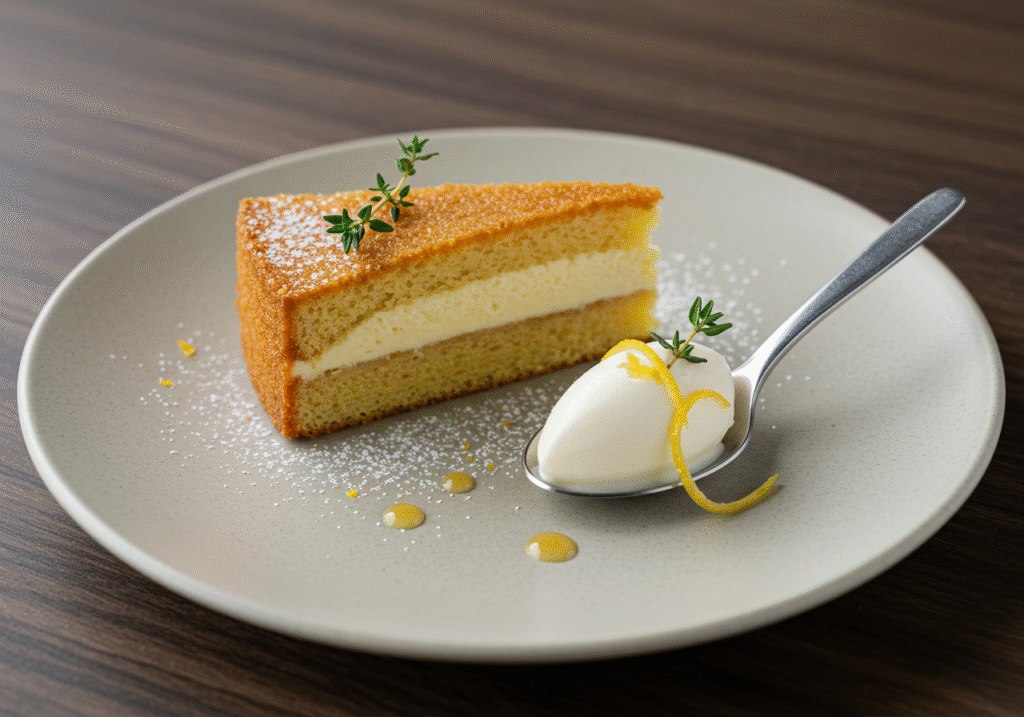
This cake is a standalone star. For a modern twist, serve a slice with a quenelle of lemon-thyme ice cream and a sprinkle of candied lemon zest. For a brunch, a simple drizzle of a lemon-elderflower glaze (1 cup powdered sugar + 2 tbsp lemon juice + 1 tbsp elderflower cordial) adds elegance. don’t forget to check out our best cake recipes.
Error Mitigation: Avoiding Common Pitfalls
- Inaccurate Oven Temperature: The single biggest cause of failure. An inexpensive oven thermometer is the best investment a baker can make.
- Rushing the Reverse Creaming: Not allowing the flour and fat to form a proper paste will undermine the entire technique’s benefits. Mix until no dry spots remain.
- Over-Aeration: Once the wet ingredients are added, mix only to combine. This is not the time to incorporate air; that was the job of the reverse cream step.
- Ignoring Internal Temperature: Visual cues can deceive. The 210°F internal temperature is your only guaranteed signal of perfect doneness.
Longevity Protocol: Storage & Preservation
The high-fat and Labne content gives this cake incredible shelf stability. Store at room temperature, wrapped in beeswax wrap or under a glass dome, for up to 4 days. For freezing, slice individual portions, wrap each in parchment paper, and place them in an airtight container. Freeze for up to 4 months. Thaw at room temperature for 1 hour.
Conclusion: The Sum of Its Parts
This lemon pound cake recipe represents a paradigm shift in home baking. By embracing food science—the reverse cream method, the emulsifying power of an extra yolk, the precision of 00 flour, and the moisture-locking prowess of Labne—we have engineered a cake that is not merely baked, but crafted. It is the culmination of data, technique, and passion, resulting in an unparalleled textural and flavorful experience.
We’ve provided the formula; now you hold the catalyst. I invite you to experience this scientific baking journey firsthand. Document your process and share your results in the comments below. For those who accept the challenge, tag your creations on Instagram with #LemonPoundCakeScience to join our community of precision bakers!
FAQs: The Lab Notes
Q1: Why is the reverse creaming method superior for pound cake?
Traditional creaming incorporates air by beating butter and sugar, but that air can create uneven tunnels and a less dense texture. Reverse creaming coats the flour in fat first, inhibiting gluten formation and resulting in a finer, more velvety, and tighter crumb—the true definition of a classic pound cake.
Q2: Can I use a glass or dark metal pan instead of a light metal tube pan?
Pan material significantly impacts baking. Dark metal and glass absorb more heat, which can lead to over-browning and a tougher crust. If you must use them, reduce the oven temperature by 25°F and check for doneness 10 minutes earlier. A light-colored aluminum pan is ideal for even, gentle heating.
Q3: My cake has a slight dip in the center. What happened?
A slight dip typically indicates either: 1) The cake was underbaked by just a few degrees, causing the center to collapse as it cooled, or 2) The leavening agents (baking powder/soda) were slightly old and lost their potency, providing insufficient lift. Always test your baking soda by dropping a pinch in vinegar; it should bubble vigorously.
Q4: What’s the purpose of tapping the pan on the counter before baking?
This crucial step dislodges large air bubbles that were incorporated during mixing. If left in the batter, these bubbles will rise to the surface during baking and create large, irregular holes and tunnels in your final cake, compromising the perfect, fine texture we’re aiming for.
Q5: Can I add poppy seeds or make a swirl?
Absolutely. For a lemon-poppy seed version, fold 2 tablespoons of poppy seeds into the final batter. For a swirl, reserve ½ cup of batter and mix it with 2 tbsp of lemon curd. Add half the plain batter to the pan, dollop the lemon curd batter over it, add the remaining plain batter, and swirl gently with a knife.